

Introduction
The Remote Desktop client app is commonly used for connecting to a variety of devices including:
- Connecting to Azure Virtual Desktop (AVD)
- Accessing Windows 365 Cloud PCs
- Access Remote Desktop Services (RDS)
- Connecting to remote PCs (when configured for RDP)
The app is popular due to the fact that it has multi device support including Windows, macOS, iOS and Android, but it’s interface looks dated to say the least. Below you can see how it looks today including the end of support message on the top.
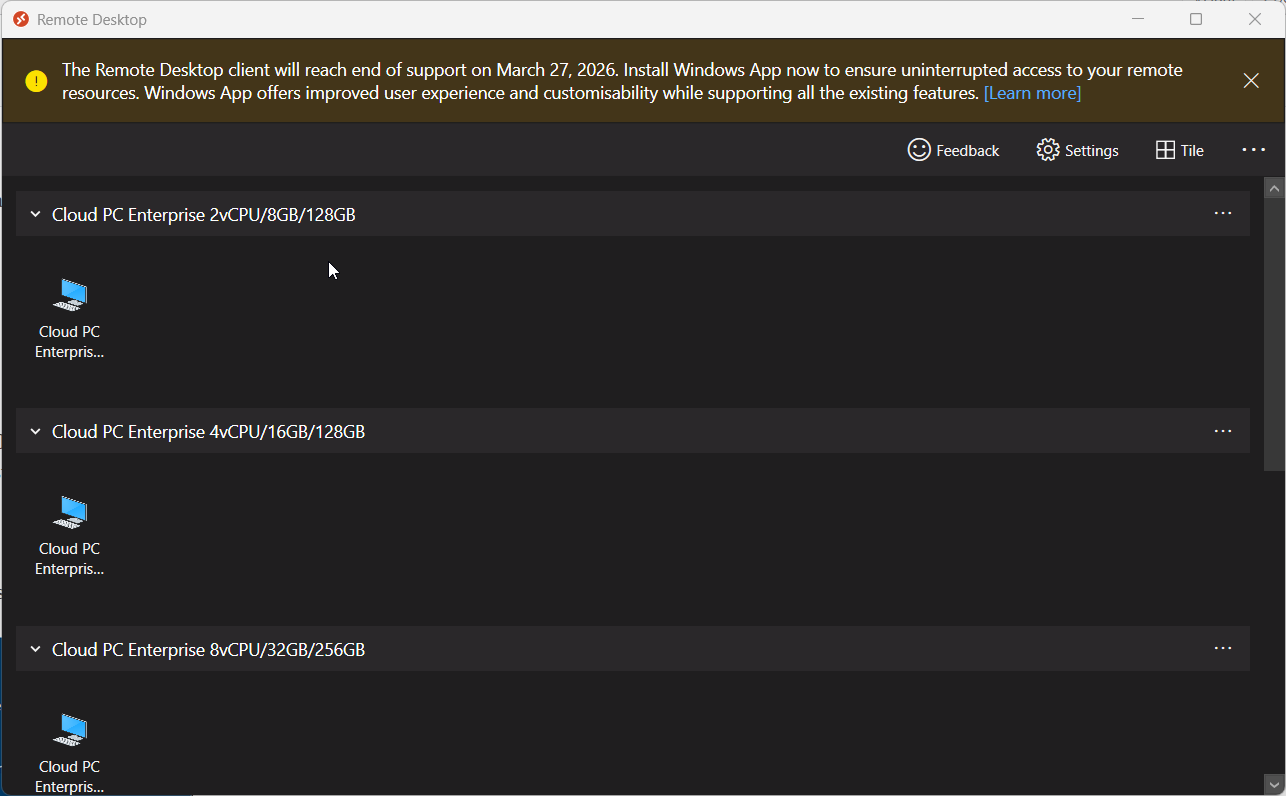
The app is soon to be end of support as of March 27th, 2026 and you are reminded of that in the banner on the app itself (shown above) and via the downloads webpage shown below.
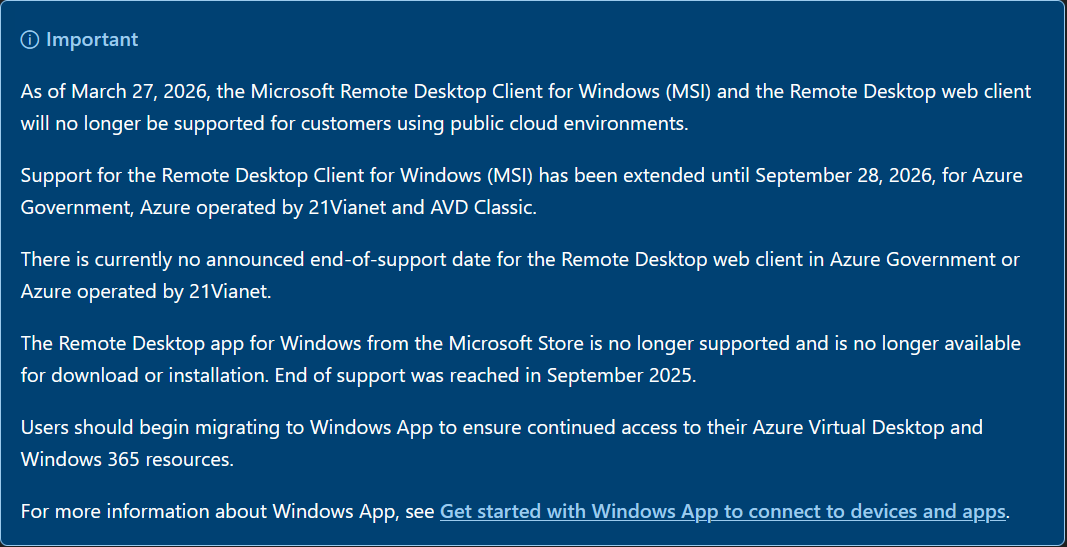
You should start migrating the app on any devices that have it installed to the new Windows app. The remote desktop client app does not automatically upgrade to the Windows app so migrating it is needed. Migrating from the remote desktop client to the Windows App can be complicated. It can be used as-is or modified to suit your individual needs.
It performs the following actions:
- Installs the Windows App via MSIX package download
- Optionally uninstalls the legacy Remote Desktop client
- Sets registry keys to control auto-update behavior
- Logs all actions to a specified log file
Myself and my fellow MVP buddy Paul Winstanley look at a migration tool provided by Microsoft and show you how you can set this up in your Intune tenant based on the instructions that come with it.
Setting it up
To set it up do as follows, in Microsoft Intune select Devices, Scripts and remediations and select Platform scripts. In there click on Create and give the script a suitable name such as Migrate from remote desktop client to Windows app.
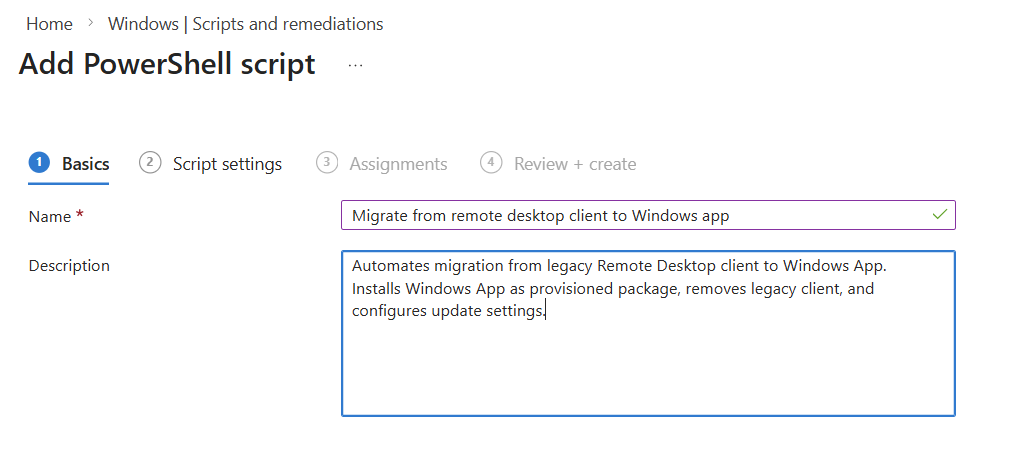
Click Next and in Configure script settings point to the downloaded Remote Desktop Client Migration script and set the following options:
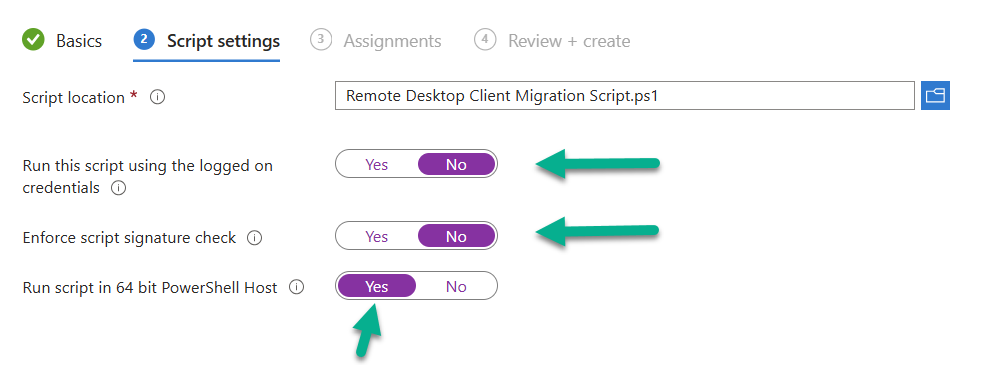
These settings force the script to run in SYSTEM context (required to set registry keys and install provisioned packages, in addition to uninstall system-level apps).
Click Next and add a group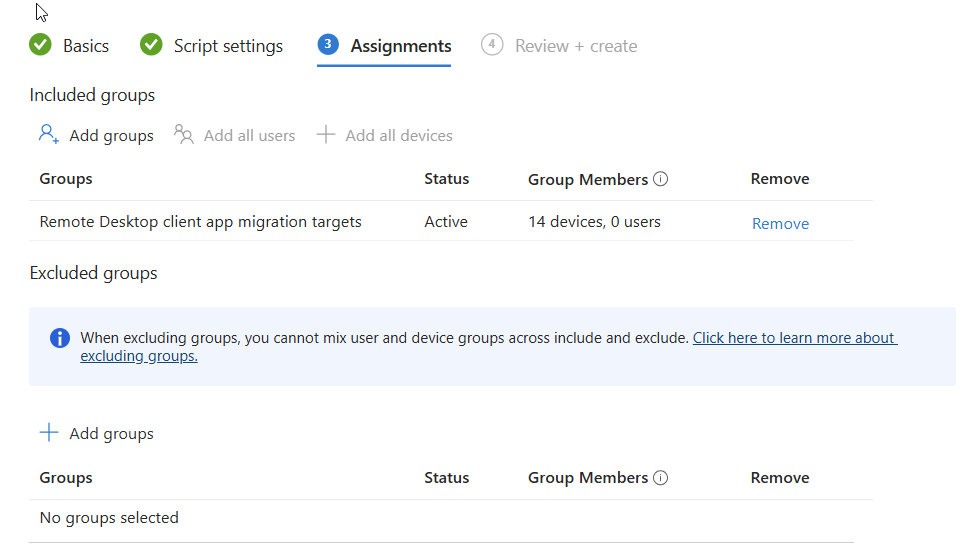 of one or more targets to migrate from the Remote desktop client agent to the Windows app. You could also exclude a group containing devices that already have the Windows app.
Note: There is an API to allow you to find out who has the Remote Desktop Agent installed, see here.
Monitor the results
After deploying out the script you can check the results via the log. The log (on the target clients) is available at $env:windir\temp\RDC-Migration.log. Below is an example of that.
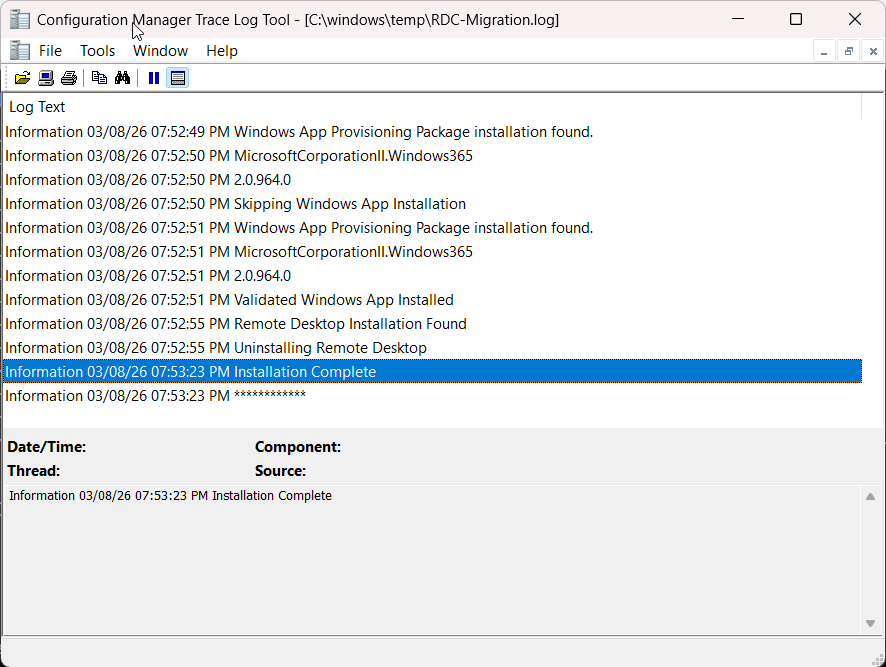
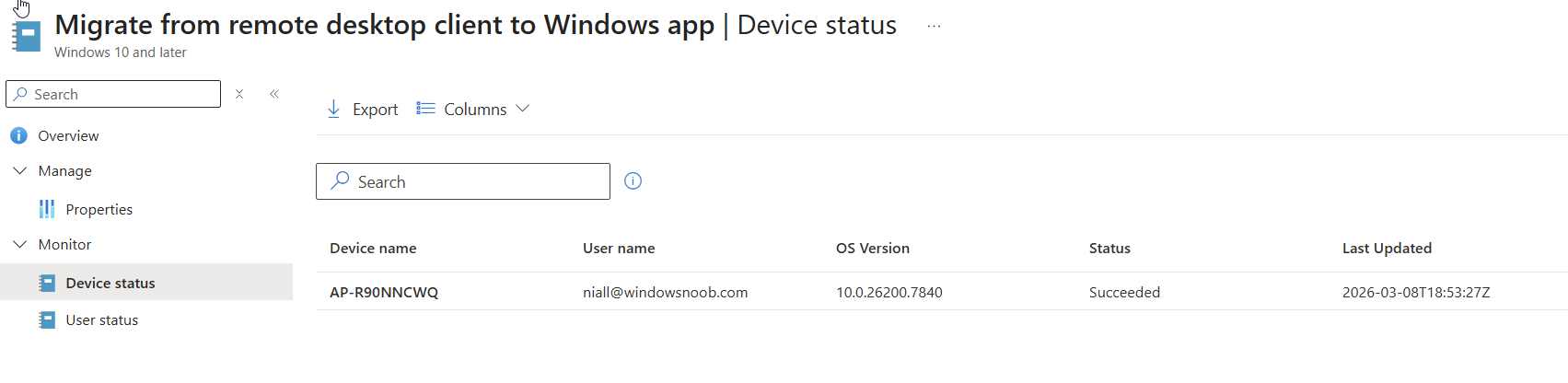
Within Intune itself, you can look at the script results,
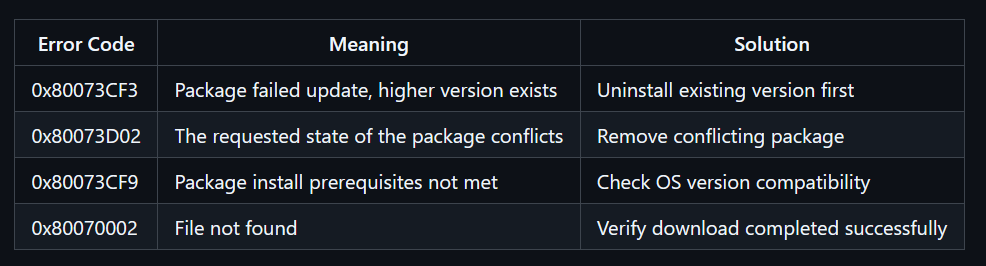
if there are errors below are some common error codes.
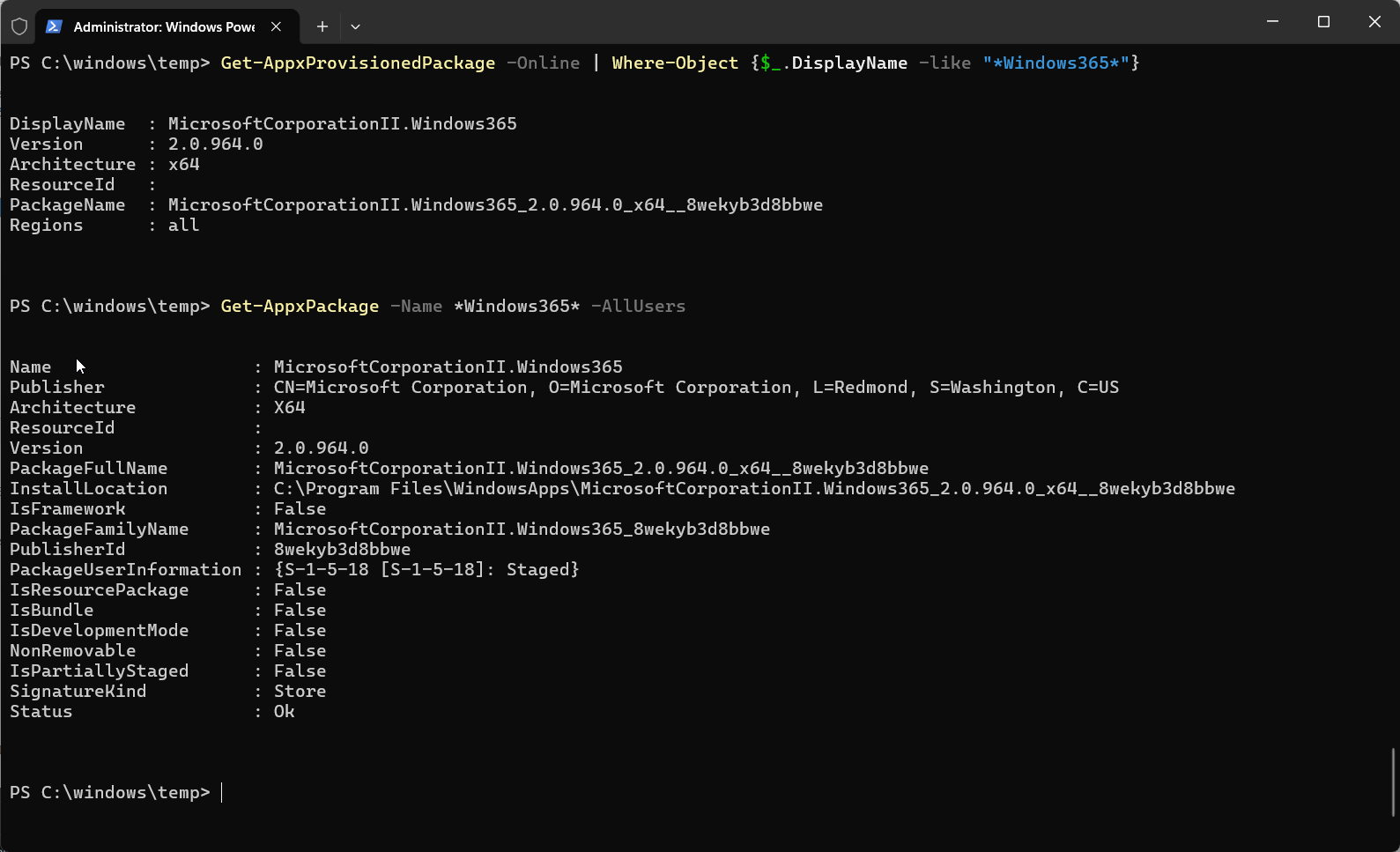
If the Windows app is shown as installed in the log but not actually installed on the device you can run the following two Powershell checks to see why it’s reporting this.
# Check provisioned packages
Get-AppxProvisionedPackage -Online | Where-Object {$_.DisplayName -like "*Windows365*"}

# Check user installation
Get-AppxPackage -Name *Windows365* -AllUsers
In our case the Windows app was not available on the device any more (had been uninstalled prior to deploying the migration script). But still Windows thought it was installed even though we logged off/logged on again prior to the test.
Related reading
- Download the Remote desktop client app – https://learn.microsoft.com/en-us/previous-versions/remote-desktop-client/connect-windows-cloud-services?tabs=windows-msrdc-msi
- Migrating to Windows app – https://learn.microsoft.com/en-us/previous-versions/remote-desktop-client/migrate-msrdc-windowsapp
- Remote Desktop Client Migration script – https://github.com/microsoft/Windows365-PSScripts/tree/main/Remote%20Desktop%20Client%20Migration%20Script
Summary
The impending end of support of the remote desktop client app is coming in less than 20 days, so it’s a good idea to migrate your install base to the new supported solution, the Windows app.
Microsoft have been kind enough to provide a script, and it works as you’d expect a Powershell script from Intune. Powershell scripts however are limited when deployed this way and we think it would be better to deploy this migration tool as a Win32 app or even a remediation solution.
For example, you might consider wrapping it with PSADT (Powershell application deployment toolkit) or similar and deploy it as a Win32 app to get better results, otherwise you might see issues relating to the Remote desktop client agent app being in use and thus not removed or that the user didn’t login yet. Most of the observed issues are listed in the troubleshooting section of the downloadable script.
That’s it for this blog post we’ll see you in the next one!
